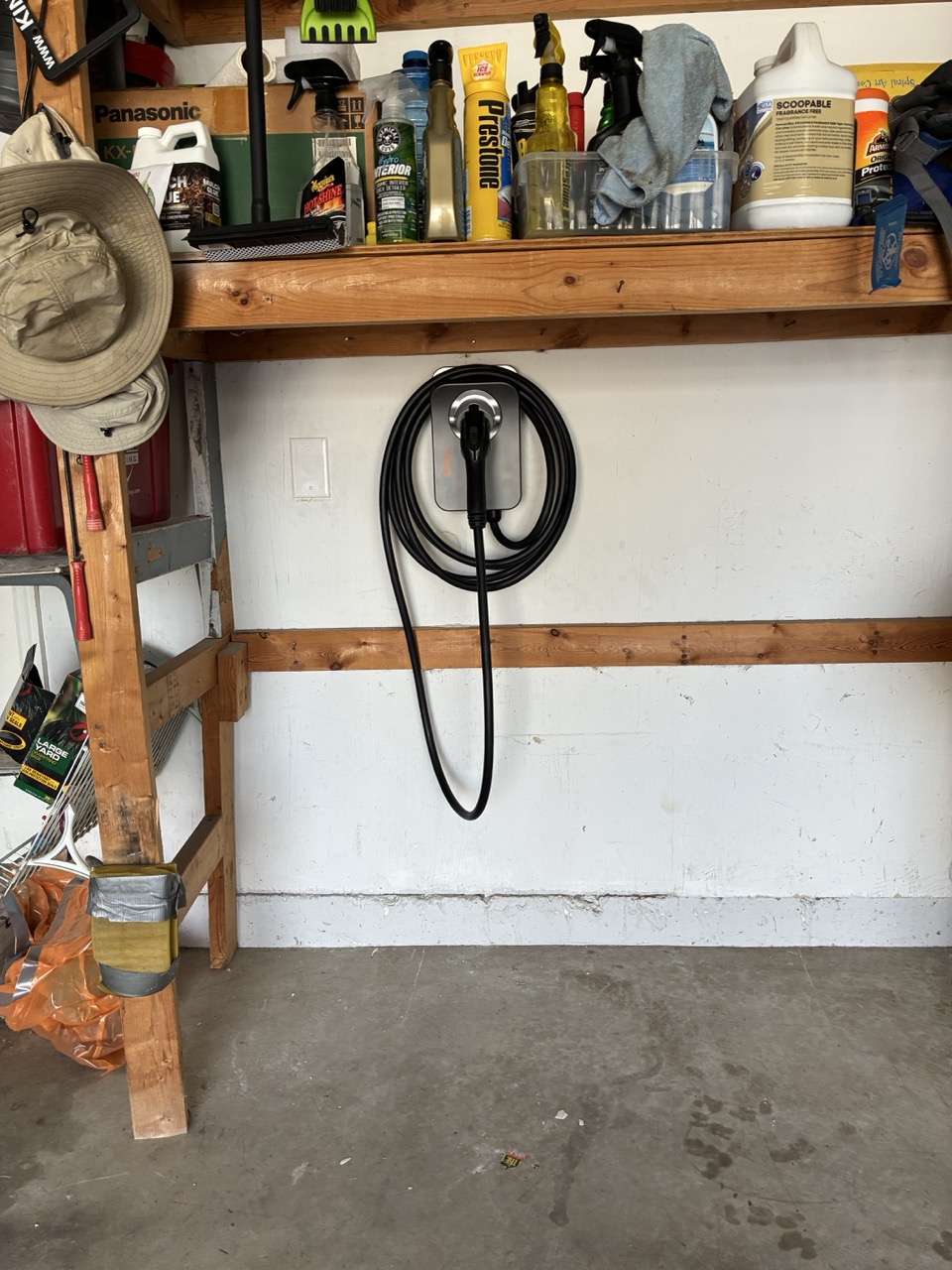
EVITP-certified electrical contractor for Level 2 EV charger installation across Greater Cincinnati and Northern Kentucky. Residential single chargers, multi-vehicle households, commercial fleet charging, and multi-tenant property installations.
Why EVITP Certification Matters
EVITP (Electric Vehicle Infrastructure Training Program) is the industry-standard certification for EV charging installations in the United States. It's a structured training program covering EV charging system design, NEC compliance specific to EV equipment, load calculation methodology for EV applications, and proper installation practices.
Why it matters for you:
- Many EV charger manufacturers require EVITP certification for warranty coverage
- Many utility rebate programs require EVITP-certified installation
- Some commercial contracts require EVITP for installer qualification
- The training catches design and installation issues that non-certified electricians often miss
Ground Zero Electric maintains EVITP certification (#4043429), verifiable through EVITP's installer registry.
Residential EV Charger Services
Single-Vehicle Installation
The most common request: a homeowner just bought their first EV (or is about to) and needs a Level 2 charger installed at home. Standard scope includes on-site assessment of existing panel and service capacity, load calculation per NEC Article 220, charger location selection, circuit installation (typically 40A to 60A), charger mounting and connection, commissioning and customer setup, and permit and inspection coordination.
Multi-Vehicle Household Installation
Households with two or three EVs need infrastructure that can charge them all without overloading service. Options include:
- Two dedicated circuits, full speed simultaneous — Best for homes with 200A+ service and adequate panel capacity. Both vehicles charge at full speed concurrently.
- Two chargers with load sharing — Some chargers can be configured to share a single circuit, charging at half speed each when both are active or full speed when only one is active.
- Smart panel solution (Span) — Dynamic load management at the panel level allows multiple chargers to operate without exceeding service capacity.
- Service upgrade plus dedicated circuits — When service capacity is the limiting factor, upgrading to 320A or 400A enables full-speed charging on multiple circuits.
We assess and recommend based on your specific home, vehicles, and charging patterns.
Tesla Wall Connector
Tesla Certified Installer for Wall Connector residential installations. The Wall Connector provides up to 48A charging (44 mph charging speed) when paired with appropriate circuit and service capacity. We install with proper Tesla-compatible breakers, correct circuit sizing, and full Tesla certification documentation.
ChargePoint Home Flex
ChargePoint Home Flex is a popular universal charger with both NEMA 14-50 plug-in and hardwired configurations. Variable amperage settings let it work with circuits from 16A to 50A.
Wallbox Pulsar Plus and Quasar
Wallbox products are gaining market share in Cincinnati. The Pulsar Plus offers up to 48A charging with smart features. The Quasar 2 (bidirectional) supports vehicle-to-home and vehicle-to-grid applications when paired with compatible vehicles.
Emporia EV Charger
Emporia EV chargers are budget-friendly options with built-in load management capability. The EV charger integrates with Emporia's broader home energy monitoring product line.
Universal J1772 and NACS Chargers
For homeowners with non-Tesla vehicles or households with mixed brands, universal chargers (J1772, or the increasingly common NACS/Tesla connector adopted by Ford, GM, and others) provide compatibility across vehicle types.
Outdoor and Detached Garage Installation
For homes where the EV charger needs to be in a detached garage, on an exterior wall, or in a carport, we run the appropriate underground or exposed feeders, install weatherproof equipment, and ensure the installation meets NEC requirements for outdoor and outbuilding applications.
Commercial EV Charger Services
Multi-Tenant Office Building Charging
Office buildings adding employee EV charging require multi-station design with appropriate load management, payment integration where required, ADA-compliant station placement, coordination with parking lot infrastructure, and service capacity assessment and upgrades when needed.
Hotel and Hospitality Charging
Hotel guest charging is increasingly expected. We install Level 2 charging stations at hotel properties with brand-compliant equipment, payment integration, and coordination with property management systems.
Retail and Restaurant Customer Charging
For retail centers, restaurants, and other customer-facing properties, EV charging is becoming a competitive differentiator. We design and install customer charging stations sized to expected demand and integrated with billing systems where required.
Fleet Charging
Companies operating fleet vehicles require dedicated charging infrastructure with reliability, monitoring, and management capabilities. We design and install fleet charging from small (4 to 8 stations) to medium (10 to 30 stations) deployments.
Multi-Family Residential
Apartments, condos, and multi-family residential properties adding EV charging face unique challenges: shared service capacity, parking allocation, billing integration, and tenant communication. We handle multi-family EV charging from initial design through installation and ongoing service.
Common Issues We Address During Installation
Existing Panel Capacity
The most common issue: homeowner wants a 48A charger, existing panel doesn't have capacity. Options include installing a smaller-amperage charger (32A or 40A) that fits existing capacity, using load management (smart charger or Span panel) to share capacity dynamically, or upgrading the panel and/or service to accommodate full-speed charging.
We assess and present honest options. Cheapest install isn't always the right answer; sometimes spending more upfront avoids issues when you add a second EV in two years.
Older Home Electrical Issues
Adding an EV charger to a 1925 home with knob-and-tube and a 60A service is a different project than adding one to a 2020 home with 200A service and a modern panel. For older homes, we sometimes recommend addressing other electrical issues first or as part of the EV project.
Long Conduit Runs
Detached garages, exterior installations, or installations where the panel is far from the charger location require longer conduit runs. We assess routing options, recommend the most cost-effective path, and price accurately during the estimate.
Concrete and Hard Surfaces
Some installations require running conduit through concrete, brick, or other hard surfaces. Cincinnati's older housing stock often presents these challenges. We have the equipment and experience to handle them.
Multi-Phase Service
Some commercial installations require 208V three-phase service or 480V three-phase service. We handle three-phase EV charger installations with appropriate equipment and load coordination.
Permit and Inspection
EV charger installations almost always require permits in Cincinnati and surrounding jurisdictions. We pull permits, coordinate inspections, and provide documentation upon completion.
Permit fees are included in project pricing.
Inspection coordination is part of standard scope. We don't leave you to schedule and manage inspections yourself.
Manufacturer Rebates and Tax Credits
Various federal, state, utility, and manufacturer programs offer rebates or tax credits for EV charger installations. We're not tax advisors, but we can point you toward current programs:
- Federal tax credit for residential EV charging equipment (consult your CPA for current applicability)
- Duke Energy programs (varies by program and availability)
- Manufacturer rebate programs (Tesla, ChargePoint, etc., as available)
For commercial installations, additional incentives may apply for fleet, workplace charging, and multi-family deployments.
Service Areas
EV charger installation available throughout Greater Cincinnati and Northern Kentucky. High EV adoption in Mason and West Chester, Indian Hill, Hyde Park and Oakley, and Blue Ash means we do significant work in those areas. Also serving Northern Kentucky. View all service areas →
Frequently Asked Questions
In nearly all Cincinnati-area jurisdictions, yes. EV charger installation is electrical work that requires permits and inspection. We handle permit coordination as standard practice.
Straightforward EV charger installations are typically completed in a single day. Installations that require panel upgrades, service modifications, or extended conduit runs require additional time, which we'll outline in the estimate.
Depends on existing service size, current loads, and target charger amperage. We perform a load calculation during the estimate and present options based on what your home actually supports.
For many chargers (ChargePoint Home Flex, Tesla Mobile Connector), NEMA 14-50 plug-in installation is an option. Hardwired installation generally provides faster charging and better reliability. We discuss tradeoffs during the estimate.
Possible for some configurations but rarely recommended. Improper installation voids manufacturer warranty, may not comply with permit requirements, and can damage the charger or create safety issues. We typically install the complete system.
Level 3 DC fast charging requires significant utility coordination, typically 480V three-phase service, and engineering involvement. For commercial Level 3 projects, we coordinate with engineering partners and handle the electrical scope under proper design.
Most modern Level 2 chargers are universal (J1772 or NACS adapter compatible). When changing brands, you typically don't need a new charger if your existing one supports the new vehicle's connector. We can advise on adapters and compatibility.
Routine EV charger installations are typically scheduled within 1 to 3 weeks. Larger projects involving panel upgrades or commercial installations are scheduled based on scope.
Related Reading
- Do I Need a Panel Upgrade to Install an EV Charger? →
- EV Charger Installation Guide for Cincinnati Homeowners →
Financing available through Wisetack (up to $25K) and Klarna (up to $10K) →
← Back to Home