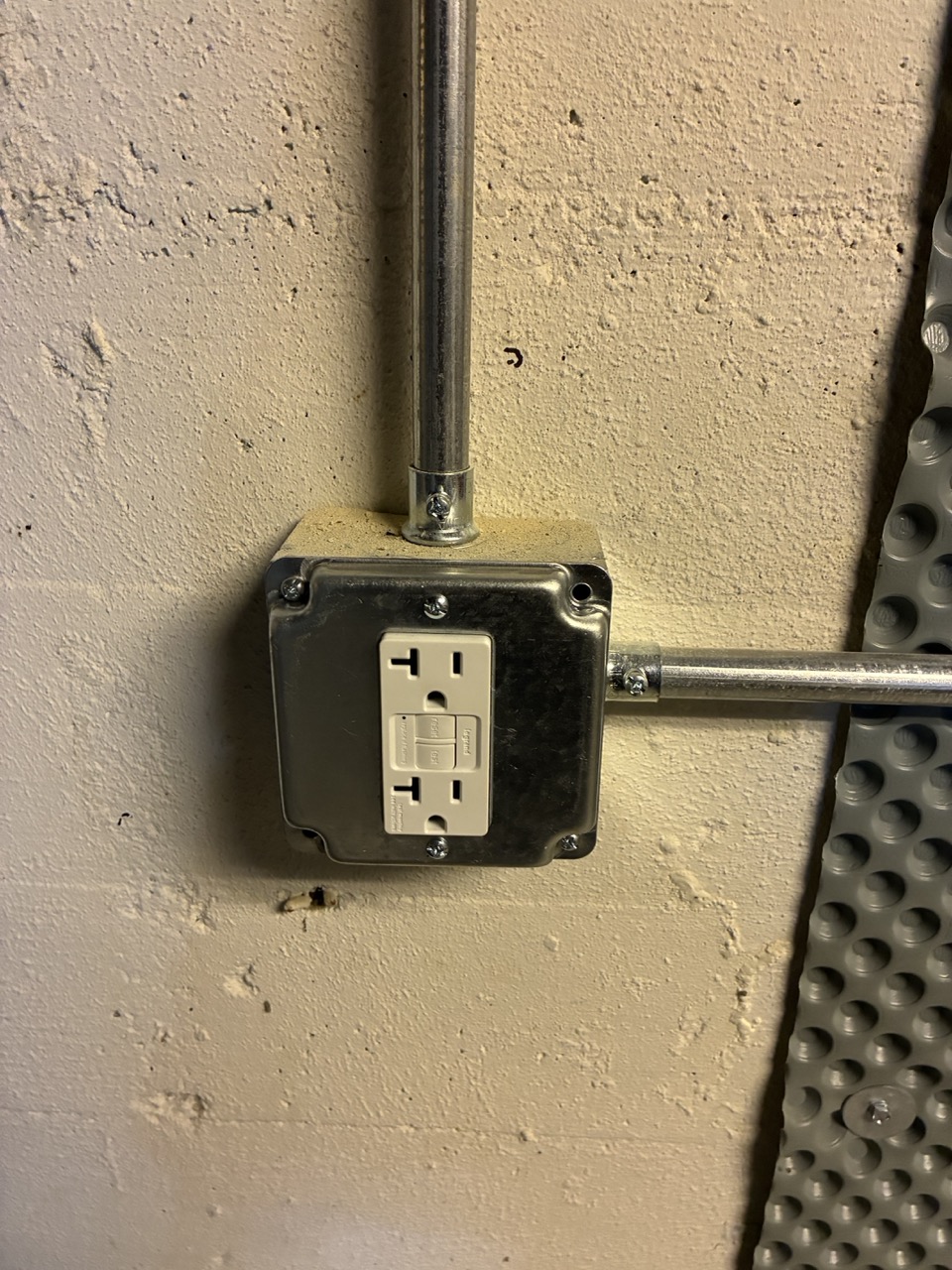
When something isn't working right — tripping breakers, dead outlets, flickering lights, or unexplained electrical behavior — we diagnose the root cause and fix it properly. Not band-aids. Real solutions.
Common Issues We Solve
- Circuit breaker tripping repeatedly
- Dead outlets or partial power loss
- Flickering or dimming lights
- Burning smell from outlets or panel
- GFCI outlets that won't reset
- Code violations identified by inspectors
- Aluminum wiring concerns
- Grounding and bonding issues
- Phantom loads and high electric bills
- Buzzing or humming from outlets, switches, or panel
How We Diagnose Electrical Problems
We don't guess. Every troubleshooting call follows a systematic process to find the actual root cause, not just treat symptoms.
- Gather information - we start by asking when the problem started, what changed, and whether anything triggers it. A breaker that trips every time you run the microwave tells a different story than one that trips randomly at 3am.
- Visual inspection - we check the panel, breakers, wiring, outlets, and connections for obvious signs of damage, overheating, corrosion, or improper work.
- Electrical testing - we use professional diagnostic tools including digital multimeters, circuit tracers, non-contact voltage testers, and insulation resistance testers to measure what's actually happening in the circuit.
- Thermal imaging - for intermittent issues or suspected hot spots behind walls, thermal imaging identifies overheating connections and overloaded wiring that visual inspection can't catch.
- Circuit tracing - when the problem involves an unknown circuit path, shared neutrals, or daisy-chained outlets, we trace the full circuit from panel to endpoint to map what's connected and where the fault is.
- Root cause and fix - once we identify the problem, we explain what's wrong, what caused it, and what the fix involves. No surprises.
Common Issues by Home Age
Cincinnati has housing stock from every era, and each generation of electrical work has its own set of common problems.
Pre-1950s Homes (Knob-and-Tube, Early Wiring)
- Knob-and-tube wiring - not grounded, insulation degrades over time, can't handle modern loads. Not inherently dangerous if undisturbed, but any modification or addition requires upgrade to modern wiring.
- Fuse boxes - limited capacity, no arc-fault protection, often over-fused (30A fuse on 15A wire - serious fire hazard).
- Two-prong ungrounded outlets throughout the home.
- Cloth-insulated wiring - insulation becomes brittle and cracks over decades, exposing bare conductors.
1950s-1970s Homes
- Aluminum wiring (common 1965-1973) - connections loosen over time and can overheat at devices. Requires proper remediation: copper pigtails with approved connectors at every outlet, switch, and junction.
- Federal Pacific and Pushmatic panels - documented failure rates, breakers don't trip when they should. Replacement is not optional. See our panel upgrades page for details.
- Undersized 60A or 100A service for modern electrical demand.
- Backstabbed outlets (wires pushed into holes instead of wrapped around screws) - connections loosen over time and cause arcing.
1980s-2000s Homes
- GFCI protection missing in locations that now require it (bathrooms, kitchens, garages, outdoors).
- No AFCI protection in bedrooms and living spaces (required by current code).
- Panel capacity maxed out after adding AC, hot tubs, or home additions without upgrading.
- Builder-grade wiring and fixtures starting to show age - loose connections, worn outlets.
2000s-Present
- Electrical demand exceeding original design - EV chargers, home offices, smart home systems, and multiple high-draw appliances.
- Improperly installed work from previous homeowners or unlicensed contractors.
- Smart device compatibility issues with older wiring (smart switches needing a neutral wire in a box that doesn't have one).
When to Call vs When It Can Wait
Not every electrical issue is an emergency, but some are. Here's how to know the difference.
Call Immediately
- Burning smell from outlets, switches, or the panel
- Sparking outlets or switches
- Panel is hot to the touch
- Buzzing or crackling sounds from inside the wall
- Lights flickering throughout the entire house (not just one room)
- Water contact with electrical equipment
- Any situation where you feel tingling or a shock when touching an appliance or surface
Schedule Soon (Within a Week)
- Breaker that trips repeatedly on the same circuit
- GFCI outlet that won't reset
- Single dead outlet or a few outlets on one circuit not working
- Dimming lights when large appliances cycle on
- Outlet or switch plate that feels warm
Can Wait for a Scheduled Visit
- Adding outlets to a room
- Upgrading two-prong outlets to grounded three-prong
- Installing dimmer switches
- General electrical inspection or safety audit
- Planning for an EV charger or panel upgrade
What to Expect During a Service Call
We know it can be stressful when something electrical isn't right. Here's how a typical troubleshooting visit works.
- We arrive at the scheduled time and ask you to describe the problem, including when it started and how often it happens.
- We inspect the affected area and your electrical panel.
- We run diagnostic tests to identify the root cause.
- We explain what we found and what the fix involves, with clear pricing before any work begins.
- If the fix is straightforward, we handle it on the spot. If it requires parts, permits, or a larger scope of work, we schedule a follow-up.
- We test everything after the repair to confirm the issue is resolved.
For a full breakdown of our process from first call to final walkthrough, see What to Expect.
Common Questions
We use professional diagnostic equipment including multimeters, circuit tracers, and thermal imaging to identify root causes — not just treat symptoms.
We prioritize urgent electrical issues. Call (513) 866-8685 and we'll work to get you scheduled as quickly as possible.
Common causes: overloaded circuit (too many devices), short circuit in wiring, ground fault, or a failing breaker. Each requires a different fix — diagnosis first.
We've resolved issues that other contractors missed. Our approach is systematic — we don't guess. We trace, test, and verify before recommending a fix.
Most likely a tripped breaker, a tripped GFCI outlet upstream on the circuit, or a loose connection at a junction point. We'll trace the circuit and find the break.
Troubleshooting is billed based on the scope of the issue. Contact us to discuss your situation and we'll give you an honest assessment of what to expect.
Yes. Faulty wiring, phantom loads, aging equipment, and poor connections can all increase energy consumption. An electrical assessment can identify efficiency issues.
Safety Questions
Yes. Buzzing usually indicates a loose connection, damaged wiring, or overloaded circuit. It can lead to arcing and fire. Stop using the outlet and call an electrician.
Turn off the breaker for that circuit immediately. Do not use the outlet. Call a licensed electrician. A burning smell indicates overheating which is a fire hazard.
You can reset a breaker once. If it trips again, do not keep resetting it — that's a sign of an underlying problem. Repeated resetting can cause overheating and fire. Call an electrician.
Aluminum wiring itself isn't dangerous, but the connections can loosen over time and overheat. If your home has aluminum wiring, it should be inspected and connections may need to be pigtailed with copper at each device.